AI Trends 2026
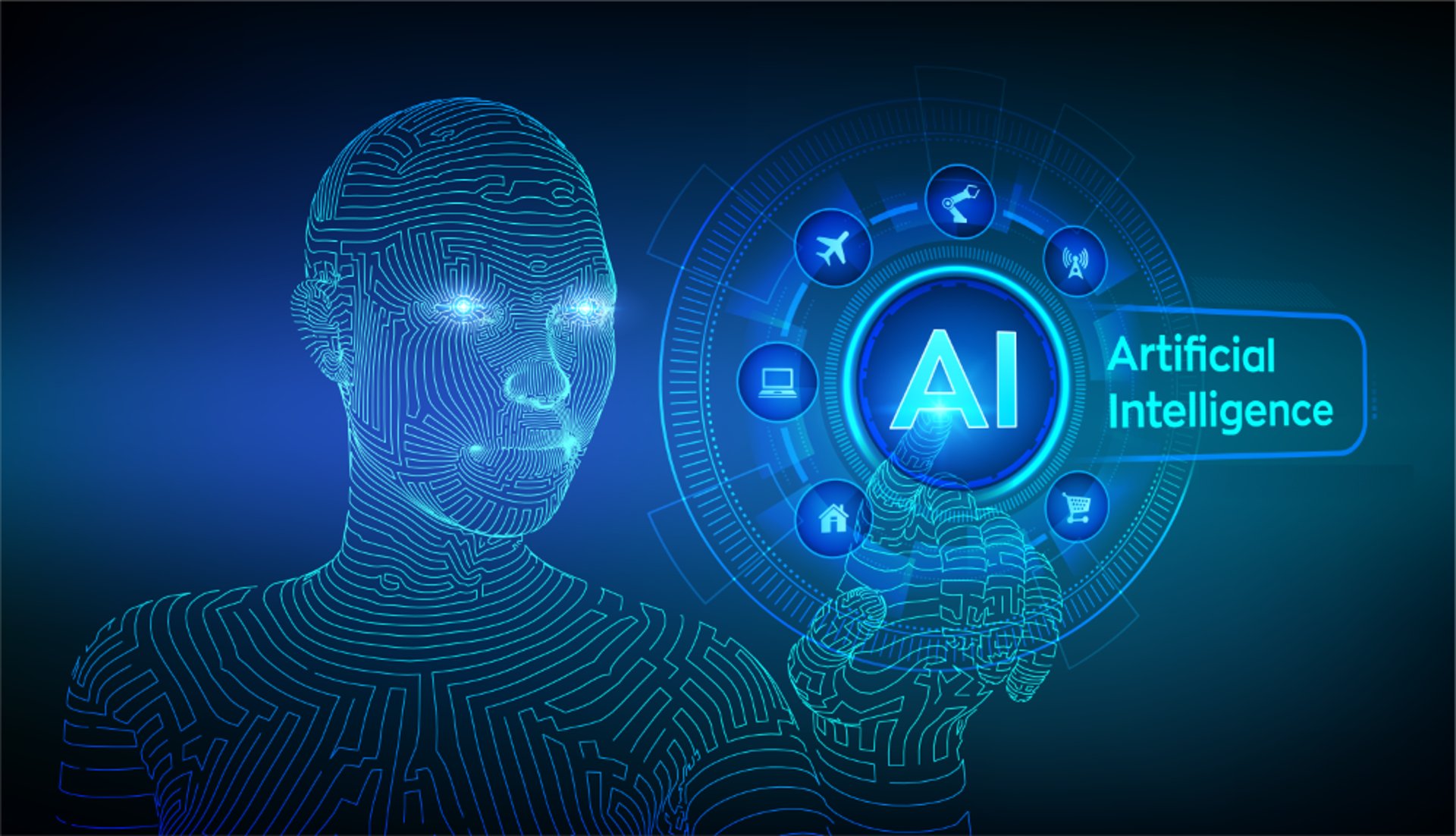
In 2026, AI trends are shifting from basic, standalone chatbots to autonomous agentic AI, multi-modal systems, and specialized, smaller models designed for specific tasks. Key trends include human-in-the-loop workflows for reliability, AI-powered scientific discovery, advanced code repository intelligence, and the rise of "small language models" (SLMs) for edge computing and privacy.
Top 2026 AI Trends
Agentic AI & Autonomous Workflows: AI is moving from answering questions to acting as "digital coworkers," capable of reasoning, planning, and executing complex, multi-step tasks independently or with human oversight.
Small & Domain-Specific Language Models (SLMs/DSLMs): Rather than just massive, general-purpose models, there is a push toward smaller, specialized models that are more efficient, cost-effective, and easier to run on edge devices.
Multimodal AI: Systems that seamlessly understand and generate content across text, audio, image, and video, closely mimicking human communication, per IBM.
Human-in-the-Loop & Governance: To manage risks and ensure reliability, companies are increasingly focusing on workflows where AI handles tasks, but humans maintain control and oversight, per YouTube.
AI for Scientific Discovery: AI is being used to accelerate breakthroughs in fields like chemistry, physics, and biology, per Microsoft Source.
Code Repository Intelligence: Developers are using AI that understands the entire context, history, and relationships within a codebase, not just individual code snippets, per YouTube.
Hyper-Personalization: Marketers and companies are using AI to analyze individual online behaviors for highly customized services, creating a more personalized customer experience, per Element14.
Hybrid Computing & Quantum: The merging of AI with quantum computing for advanced optimization and modeling of new materials, per YouTube.
Key Business & Social Impact:
Workplace Upskilling: AI proficiency is becoming mandatory, with, per Codewave.
AI Integration: Many organizations are focusing on integrating AI to improve operational efficiency and decision-making, per Appinventiv.
Regulatory Focus: Increased attention to ethical AI and governance, per Coursera.
In 2026, Computer Science (CS) is undergoing a fundamental shift where AI is no longer a tool used by developers, but a core architectural layer of the software they build. The focus has moved from "writing code" to "expressing intent" through AI-Native Development and Agentic Systems
Core CS & Software Engineering Trends
AI-Native Development Platforms: These platforms allow developers to build enterprise-ready software using generative AI, shifting the paradigm from manual coding to orchestrating intelligent systems.
Agentic Workflows & Multi-Agent Systems (MAS): Software is moving toward autonomous agents that can plan, execute multi-step tasks, and collaborate with other specialized agents to solve complex problems.
Vibe Coding: A maturing concept where AI generates, suggests, and refactors code in real-time based on natural language, enabling rapid prototyping in minutes rather than days.
Repository Intelligence: Advanced AI tools now understand the deep context, relationships, and history across entire codebases—not just single files—to catch errors and automate routine fixes.
AI-Driven DevSecOps: Security is now embedded directly into CI/CD pipelines with AI-powered automated vulnerability scanning and real-time threat detection.
Cloud 3.0: Cloud architectures are evolving into active enablers for AI, with a focus on hybrid, sovereign, and private models to support low-latency inference and data governance.
Shifting Roles & Career Impact
The role of the "manual scripter" is fading. Engineers must master prompt craft, system integration, and design judgment. High demand is growing for roles like AI Governance Specialists, Agentic Systems Architects, and Model Fine-tuning Engineers. CS students are now prioritized to learn RAG (Retrieval-Augmented Generation) architectures, Confidential Computing, and Quantum-AI optimization.
In 2026, AI is not replacing coding careers but fundamentally reshaping them by shifting the value from writing syntax to architectural judgment and system orchestration.
The Role Shift: From Coder to Orchestrator
The traditional "labor pyramid" of many juniors supporting a few seniors is evolving into a "hub-and-spoke" model where a single senior engineer manages a fleet of specialized AI agents.
Level Up Coding
Boilerplate is Dead: Routine tasks like writing CRUD operations, basic CSS, and standard API integrations are now almost entirely automated.
Verification is the New Coding: Engineers now spend roughly 80% of their time verifying AI-generated logic for security, scalability, and edge cases rather than writing it from scratch.
Aptitude Over Syntax: Hiring has pivoted toward evaluating problem-solving skills and foundational knowledge (algorithms, data structures) rather than rote memorization of language syntax.
Emerging High-Demand Roles
As legacy roles decline, new specialized positions are growing rapidly:
AI/ML Engineer: Focused on developing and fine-tuning models rather than just using them.
Agentic System Architect: Designing workflows where multiple AI agents collaborate to solve business problems.
AI Security Architect: Protecting systems from AI-specific threats like prompt injection and poisoned training data.
FinOps for AI: Managing the unpredictable and high costs of GPU workloads and AI inference in production.
The "AI Paradox" in Employment
While some reports show a 9-10% drop in junior hiring at AI-adopting firms, the overall job market for developers is still projected to grow 15% through 2034—five times faster than average. This growth is driven by AI enabling software to expand into non-traditional sectors like healthcare, agriculture, and manufacturing.
The "Future-Proof" Strategy
1. For Students: Move Beyond "Syntax"
In 2026, knowing how to write Python is a commodity. Knowing why a specific architecture works is the career moater.
Master the Fundamentals: Deeply understand Data Structures, Operating Systems, and Networking. AI can write code, but it struggles to debug low-level memory leaks or network latency.
Learn RAG and LLM Ops: Don't just call an API; learn how to build Retrieval-Augmented Generation systems and manage the lifecycle of models in production.
Build "Un-AI-able" Projects: Avoid generic to-do lists. Build projects that require physical hardware integration (IoT) or solve highly specific, niche business problems.
2. For Experienced Developers: The "Force Multiplier" Phase
Seniority is now defined by how many AI agents you can effectively supervise.
Become a Product Engineer: Shift from "I build what I'm told" to "I solve the user's problem." AI handles the implementation; you must handle the product vision.
Focus on System Design: AI is great at functions but poor at distributed systems architecture. Specialize in scaling, reliability, and security.
Technical Debt Management: AI-generated code can create "instant legacy code." Learn to be an elite Code Reviewer who ensures AI output follows clean code principles and long-term maintainability.
Essential Specializations for 2026
If you are choosing a path today, these three are predicted to have the highest salary growth:
AI Security (DevSecOps): Protecting agents from prompt injections and data poisoning.
Robotics & Physical AI: Writing software that interacts with the real world (drones, warehouse robots).
Low-Level/Embedded AI: Optimizing small models to run on phones or wearable devices without using the cloud.
To give you a concrete roadmap for 2026, here are the high-impact specialisations and certifications that currently hold the most weight in the industry.
1. Top Certifications for 2026
AI Architecture: Google Cloud Professional Machine Learning Engineer – Focuses on scaling AI models in production.
Agentic Systems: Microsoft Certified: Azure AI Engineer Associate – Specifically covers building autonomous agents and conversational AI.
Security & Governance: IAPP Certified AI Governance Professional (AIGP) – Crucial for high-level roles ensuring AI follows legal and ethical standards.
Generative AI Development: DeepLearning.AI’s Generative AI with LLMs – The gold standard for understanding how to fine-tune and optimize large models.
2. Essential University Courses / Topics
If you are still in school or looking for online courses (like Coursera/edX), focus on these modules:
Distributed Systems & Cloud Computing: Essential for understanding how AI clusters operate at scale.
Natural Language Processing (NLP): The core science behind the current AI boom.
Cybersecurity & Cryptography: Crucial as AI-generated malware becomes more sophisticated.
Human-Computer Interaction (HCI): Focuses on how humans will collaborate with AI "teammates" in the future.
3. Skills to "Stack"
The highest-paid developers in 2026 are "T-Shaped": deep knowledge in one area, broad knowledge in others.
Core Skill: Backend Engineering (Rust, Go, or Python).
AI Skill: Prompt Engineering and RAG (Retrieval-Augmented Generation).
Business Skill: Cost Management (FinOps) – knowing how to run AI without blowing the budget.
Top Indian Institutional Programs (Hybrid/Online)
IIT Roorkee: Advanced AI Engineering: A professional certificate covering RAG, agentic workflows, and production deployment.
IIT Kanpur: e-Masters in AI & ML: A comprehensive 1-2 year executive degree for working professionals.
IIT Madras: Applied AI & ML: Practical engineering focus with a strong emphasis on industry-ready projects and placement support.
IIIT Bangalore: Executive Diploma in ML & AI: A prestigious 12-month program ideal for those seeking academic brand value in tech hubs like Bangalore.
Specialized "New Wave" Tracks (2026 Focus)
AI Security: The Modern Security AI Security Certification is the top choice for hands-on defense against prompt injection and data leakage.
LLMOps & RAG: DeepLearning.AI's Retrieval Augmented Generation track is the standard for building knowledge-intensive AI applications.
Agentic AI: Vanderbilt’s Agentic AI for Leaders and specialized GSDC Agentic AI Professional certifications focus on autonomous multi-agent systems.
Free Foundations (Best for Quick Starts)
Google AI Essentials: Under 10 hours; best for mastering prompt engineering basics.
Microsoft: Generative AI for Beginners: A 21-lesson curriculum focused on building your first GenAI apps.